
Short answer: Not necessarily.
Many buyers assume that a 10:1 extract is stronger or higher quality than a 5:1 extract. In reality, the extract ratio does not determine quality or effectiveness by itself.
The right choice depends on the raw material, extraction process, and active compound content, not simply the ratio.
1. What Does an Extract Ratio Mean?
A ratio such as 10:1 or 5:1 indicates the amount of raw plant material used to produce the final extract.
- 10:1 = 10 kg of raw material → 1 kg of extract
- 5:1 = 5 kg of raw material → 1 kg of extract
This only describes the concentration process. It does not guarantee that the extract contains more active ingredients.
2. Why a Higher Ratio Is Not Always Better
Active Compounds May Be Similar
Different extraction methods can produce extracts with similar levels of active compounds, even if their ratios are different.
For example:
| Extract | Ratio | Active Compound |
| Extract A | 5:1 | 20% Polyphenols |
| Extract B | 10:1 | 20% Polyphenols |
Although Extract B has a higher ratio, both products provide the same polyphenol content.
Extraction Efficiency Matters
Not every beneficial compound can be extracted completely.
Factors such as:
- Solvent selection
- Extraction temperature
- Extraction time
- Purification process
all influence the final composition.
A well-designed 5:1 extract can outperform a poorly processed 10:1 extract.
Plant Materials Are Naturally Different
The content of active compounds varies depending on:
- Growing region
- Climate
- Harvest season
- Plant variety
Because raw materials differ naturally, the extract ratio alone cannot accurately reflect product quality.
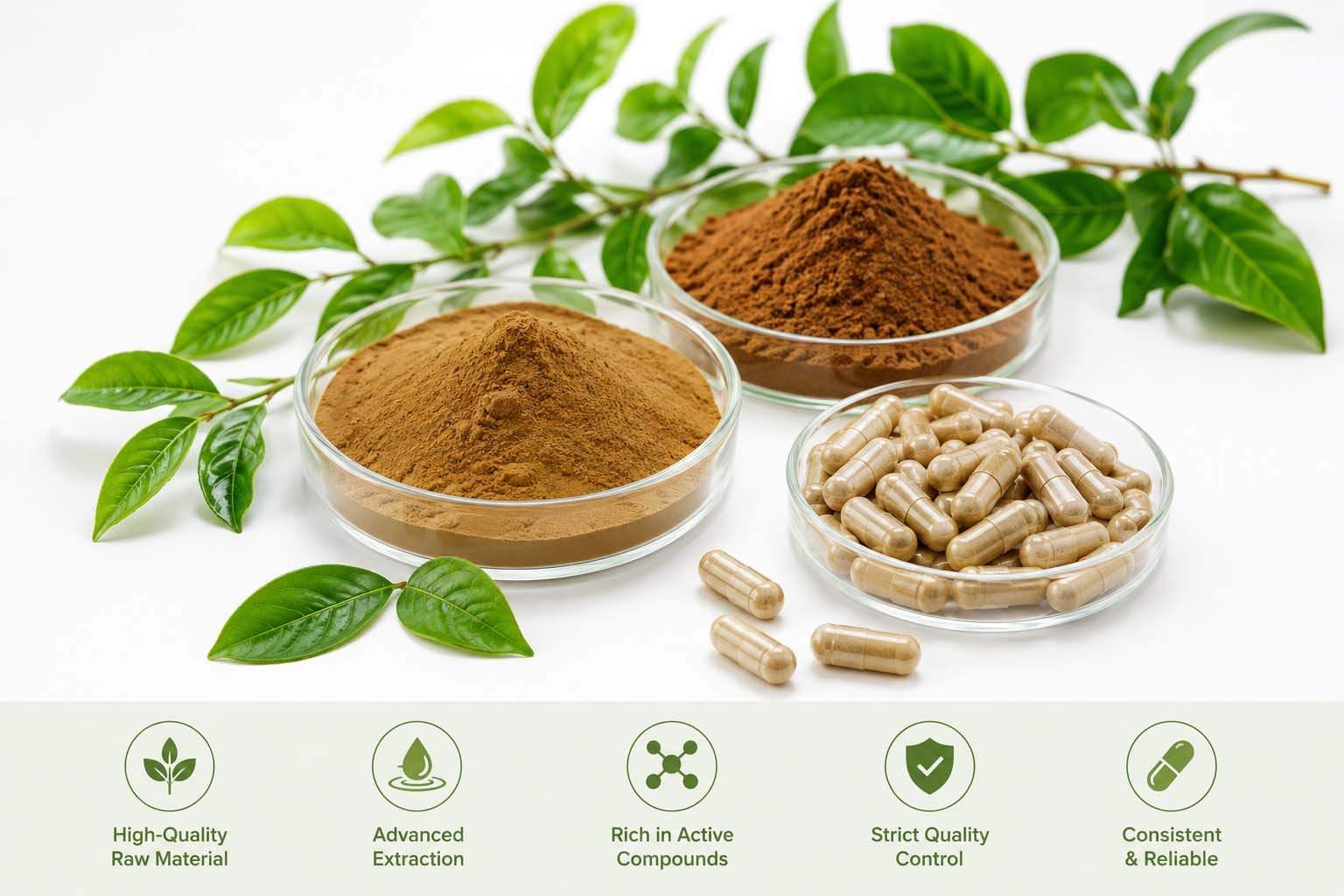
3. Standardized Extracts Are Often More Reliable
For many applications, buyers should pay more attention to standardized active ingredients than to extraction ratios.
Examples include:
- 95% Curcuminoids
- 50% Polysaccharides
- 98% Resveratrol
- 25% Anthocyanins
Standardized extracts provide consistent potency and are easier to control for quality.
4. When Is a Ratio Extract Suitable?
Ratio extracts are commonly used when:
- No official active marker is available
- Traditional herbal applications are preferred
- A cost-effective botanical ingredient is needed
In these cases, choosing a reliable manufacturer is more important than simply selecting the highest ratio.
5. How to Choose Between 5:1 and 10:1
Before purchasing, consider these questions:
- What is the required active ingredient level?
- Is the extract standardized?
- Which extraction method is used?
- Is the product supported by a Certificate of Analysis (COA)?
These factors are much more meaningful than comparing extraction ratios alone.
Conclusion
A 10:1 plant extract is not automatically better than a 5:1 extract.
The extraction ratio only indicates how much raw material was used. It does not represent potency, purity, bioactivity, or overall quality.
When selecting a botanical extract, focus on active compound content, standardization, manufacturing process, and supplier quality, rather than relying on the ratio alone.